Key Points
- D-Wave Quantum shares are in a technical downtrend with weak volume, and fading enthusiasm for quantum computing stocks suggests further declines are likely.
- D-Wave's elevated short interest and bearish technical indicators suggest continued volatility, although a positive catalyst could trigger short covering.
- Q3 results showed minimal revenue against large losses and rising share dilution, raising concerns about cash burn despite roughly $503 million in liquidity.
- Special Report: RIP Tesla (Elon just confirmed the unthinkable)
D-Wave Quantum (NASDAQ: QBTS) may be a good long-term investment because of the potential for quantum computing. Quantum computing could open new industries, enabling complex solutions quicker than currently possible, potentially revolutionizing industries such as healthcare, energy, and materials, but investments are long-term oriented, and this is a long-term play. The question in late 2026 is whether it is a good buy, and the answer is very different. While the long-term opportunity is robust, fundamental factors and market action suggest this stock could move lower, potentially much lower, before finding a bottom.
The primary factor is the timeline to broader adoption. Some industry roadmaps target major advances in the next five to 10 years, potentially unleashing the industry, but such breakthroughs are not guaranteed for any specific company, D-Wave Quantum included.
The problem is that five to 10 years is a long time at the low end, and the range is wide with no guarantees. This leads to a truth that would-be investors must face: quantum computing isn’t as cool as it was a year or so ago. Quantum stocks were on fire in 2024 and 2025, riding a wave of euphoria, optimism, and hope that is no longer present. Today’s quantum stock market conditions are, generally speaking, unenthusiastic, and enthusiasm drives speculative stock prices higher.
The Technical Reality: QBTS Is in a Downtrend
D-Wave’s price chart reflects a downtrend in the daily and weekly action. Price action is well below the longer-term exponential moving averages (EMAs) and shows resistance at the shorter-term EMAs following the Q3 earnings release, suggesting the downtrend will continue. The stock could become oversold and rebound, but any rebound is unlikely to gain or sustain traction without a bullish catalyst. Other signs of weakness include dwindling and lackluster trading volume, reflecting a market losing interest in the story.
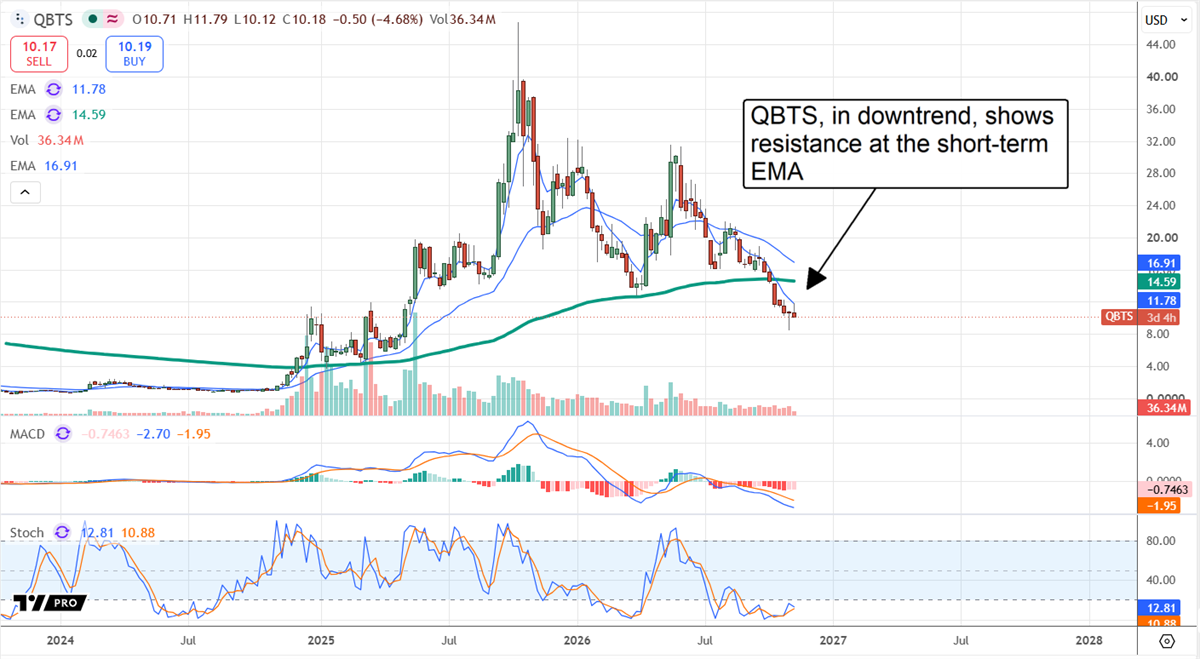
Risks include short interest, which is high and rising in recent reports. It isn’t the highest among public companies, at 21.67% of the float as of Oct. 15, but it's high enough to contribute to volatility, particularly without a bullish catalyst. Catalysts will center on technological breakthroughs and their impact on revenue and earnings forecasts.
The upshot is that when/if a catalyst emerges, the short-covering rally can verge on a squeeze, given the days to cover: five. At five, it takes a week at average volume for shorts to cover their collective position, suggesting at least a 5x spike in trading volume when a squeeze triggers. The 5x target is a minimum target because it will take more than news to trigger a squeeze; it will also take an influx of capital and a rapid decline in available shares.
Analysts and Institutional Sentiment Isn’t Quite Strong Enough
Analysts and institutional data reflect confidence in the quantum thesis but not high conviction across the board, and some sentiment has soured over the past year. MarketBeat tracks 16 analysts with current coverage, enough for some conviction in the outlook, but trends are down, including price target adjustments and rating changes. Consensus is pegged at Moderate Buy, with nearly 240% upside indicated; the risk is that price targets and ratings will continue to sour, providing no incentive to buyers and a headwind for existing holders.
Institutions, meanwhile, have been buying on balance as shares declined but own about 42% of the company, providing an uncertain support base. Bad news may not send them to the exits; the risk is that falling prices won’t trigger a buying response and they keep falling.
Q3 results did not provide a catalyst for buyers or any reason for improved sentiment. Revenue grew about 20% year-over-year and outpaced the consensus but is a token amount, about $4.5 million, far short of what was spent. Losses ranged from a $48.2 million net loss to a $53.5 million operating loss, about 12 times revenue at the high end. The good news is that the company has substantial liquidity; the bad news is that cash burn has increased compared to the prior year and is expected to continue. Balance sheet highlights include about $503 million in cash and marketable investments, plus up to $100 million in government funding contingent on certain milestones. The company's runway will depend on future spending.
Dilution is another risk for investors to consider. QBTS's weighted-average share count increased by about 10% year over year in Q3 and more than 19% for the first nine months compared with the same period last year, a sizeable headwind that is unlikely to stop. QBTS may not sell shares soon, but dilution will be a constant threat until commercialization, which the existing runway is insufficient to reach. It's only a matter of time until a share sale or debt raise is offered.
Read this article online ›

The best investment opportunities don't wait. Get our research and stock ideas delivered straight to your smartphone—so you never miss a market-moving opportunity. Our text alerts ensure you see timely stock ideas and professional research reports instantly, whether you're in a meeting, commuting, or away from your desk.
Get Text Alerts from American Market News (free)




Comments
Post a Comment