
A Message From Profits Run
Here's what changes if you wait to download my "Simple Options Trading For Beginners" book.
The book doesn't. Same pages, same plain-English explanations, same handful of techniques.
The only thing that changes is the price.
Right now, through this temporary link, it costs nothing.
After the link expires, it's $29.97 on my website. That's what it sells for most of the year.
So "I'll grab it later" isn't really a delay. It's a decision to pay $29.97 for something you could have had for nothing.
Not a great trade.
The better one takes a few seconds and happens today.
Download your copy while it's still $0.
Good Trading,
Bill Poulos
P.S. Once it's saved to your computer, the price can't reach it. That only works if you grab it before the link expires.
Just For You
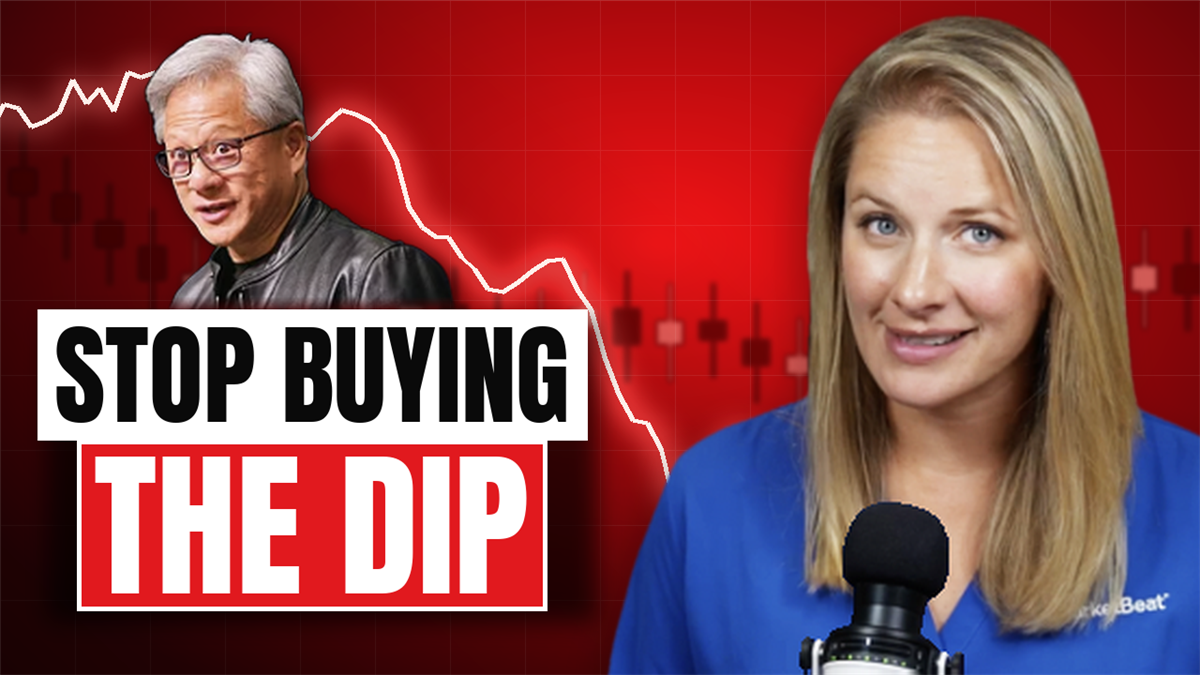
Is Buying the NVIDIA Dip a Mistake? 3 Value Stocks Offer a Different Path Forward
Author: Bridget Bennett. Article Published: 11/13/2026.
Key Points
- Ashland could unlock significant shareholder value through activist-driven strategic changes or a potential sale, although its turnaround remains unproven.
- Central Garden & Pet offers strong cash flow and an attractive valuation, while a breakout above $45 could signal renewed investor confidence and upward momentum.
- HCA Healthcare benefits from long-term demand for hospital services and earnings growth potential, but Medicaid funding cuts and health care policy uncertainty could pressure profitability.
- Special Report: You can take a position for less than a dollar
The market's most important stock just lost its longtime leader. Jensen Huang has officially resigned from NVIDIA (NASDAQ: NVDA), with CFO Colette Kress stepping in as interim CEO.
The leadership shakeup has implications beyond NVIDIA shareholders. As a major holding in many broad-market and technology-focused exchange-traded funds (ETFs), a prolonged NVIDIA sell-off could weigh on the broader market.
But does the decline make NVIDIA a bargain? The stock was already about 30% below its highs before Huang's resignation. Marc Lichtenfeld, chief income strategist at The Oxford Club, believes NVIDIA's long-term growth story remains intact. At roughly 17x projected 2027 earnings, he considers the valuation reasonable, though waiting for the stock to stabilize could make sense.
The reflex is to buy the dip. But a falling share price doesn't necessarily mean a stock is undervalued. Lichtenfeld emphasizes business quality, cash flow and earnings growth relative to valuation rather than simply buying the dip.
For investors looking beyond NVIDIA's turmoil, Ashland (NYSE: ASH), Central Garden & Pet (NASDAQ: CENTA) and HCA Healthcare (NYSE: HCA) offer three very different investment opportunities, each with potential catalysts largely independent of the AI trade.
Ashland: Activist Campaign Could Unlock Hidden Value
Ashland makes additives and ingredients for food, beauty products, life sciences and other industries. The stock has been beaten up after years of uneven results.
The forward numbers look different.
Earnings are expected to grow 28% in the fiscal year ending September 2027 and another 32% over the next two years, yet shares trade at 18x 2027 earnings. That puts the price-to-earnings-to-growth (PEG) ratio well below one, suggesting the stock could be undervalued if those growth projections materialize.
But an earnings recovery isn't the only potential catalyst. Activist investors have also been pushing for changes that could unlock shareholder value. They've already added two board members, and the board is weighing strategic alternatives, which often means a sale or spin-off. A competitor sold a comparable materials business for 13x EBITDA. Applied to Ashland's guidance, that multiple implies a price of about $118 a share, roughly a 50% premium to the stock's price when Lichtenfeld ran the numbers. He doesn't expect a deal that rich, but the gap shows what could surface.
The risk is that the turnaround isn't proven yet, and 11% of the float is sold short by investors who typically do their homework. That positioning suggests significant skepticism about the company's prospects, though it could fuel a squeeze if the stock starts climbing and short sellers rush to cover. Upcoming quarterly earnings reports will help determine whether Ashland's recovery is gaining traction.
Central Garden & Pet: Cash Flow Faces a $45 Resistance Test
Central Garden & Pet offers a cleaner kind of value.
The roughly $2.6 billion company trades at about 14x forward earnings, below the sector median of 16, with earnings expected to grow 27% over the next four years.
Price-to-sales is around one, and price-to-cash-flow is just below eight, compared with a sector median of 10.7. The company generates roughly $300 million a year in free cash flow, debt has held steady for years, and cash keeps building.
That financial stability is supported in part by Central Garden & Pet's exposure to relatively resilient consumer demand, particularly the humanization of pets. Owners treat dogs and cats as family, so during a downturn, they're more likely to trade down on food than give up the animal. That makes the business recession-resistant, rather than recession-proof, per Lichtenfeld.
Despite those financial strengths, Central Garden & Pet's stock has struggled to gain momentum. Shares peaked just below $45 in 2021 and have traded sideways since. In Lichtenfeld's view, a move through that level could put $60 in reach within about 12 months. Prices often move ahead of fundamentals as insiders and well-researched funds position early. The $45 level is the one to watch.
HCA Healthcare: Growth Outlook Faces a Medicaid Policy Test
HCA Healthcare runs the largest hospital network in the United States, with a significant presence in Texas and Florida. Population growth in both states, along with Florida's aging population, could help support long-term demand for hospital services.
Patients need care whether the economy is booming or contracting.
Earnings are projected to more than triple over the next 10 years, according to Lichtenfeld, yet the stock trades at a price-to-earnings (P/E) ratio of about 17 on both a trailing and forward basis, below the sector median of 20.
Estimates call for single-digit growth in 2026 and 2027, followed by double-digit growth every year from 2028 through 2035. Scale helps with cost control and local market dominance.
This isn't a bargain-bin rebound. The shares have risen dramatically over the past 15 years and remain relatively close to their all-time high. But Lichtenfeld sees further potential in the company's ability to grow earnings over time, even without a deeply discounted valuation.
One of the biggest uncertainties surrounding HCA's long-term earnings outlook is federal health care policy. Changes to Medicaid funding and insurance coverage can affect both patient volumes and hospital reimbursement rates. HCA has already warned that it expects $550 million to $650 million less in Medicaid supplemental payment benefits in 2027, adding pressure to an already challenging reimbursement environment.
But politics cuts both ways. Democrats won control of both chambers in November and will take office in January 2027. Lichtenfeld sees potential upside if lawmakers move to reverse Medicaid cuts, although President Trump's veto power could limit their ability to enact major changes. A broader debate over Medicare for All could also resurface ahead of 2028, but its implications for hospitals would depend on the details of any proposal.
The upside is that health care policy turns slowly, like a cruise ship, so today's tailwinds could have legs.
Don't Chase the AI Dip: 3 Value Stocks, 3 Different Catalysts to Watch
Ashland, Central Garden & Pet and HCA Healthcare share one thread: Each pairs a credible growth outlook with a valuation that hasn't caught up, and none lives or dies on AI spending.
For Ashland, the opportunity hinges on a successful turnaround and the potential for activist-driven strategic changes. Central Garden & Pet needs to translate its steady cash flow into stronger share-price momentum, while HCA Healthcare must deliver sustained earnings growth amid ongoing uncertainty over health care policy.
When the market's biggest name is in flux, discipline matters more than the dip. Stay focused on earnings growth relative to price, because that's what moves undervalued stocks from overlooked to rewarded.
For monthly research on income and value ideas, join Marc Lichtenfeld's Oxford Income Letter for his latest stock picks.
. |


Comments
Post a Comment