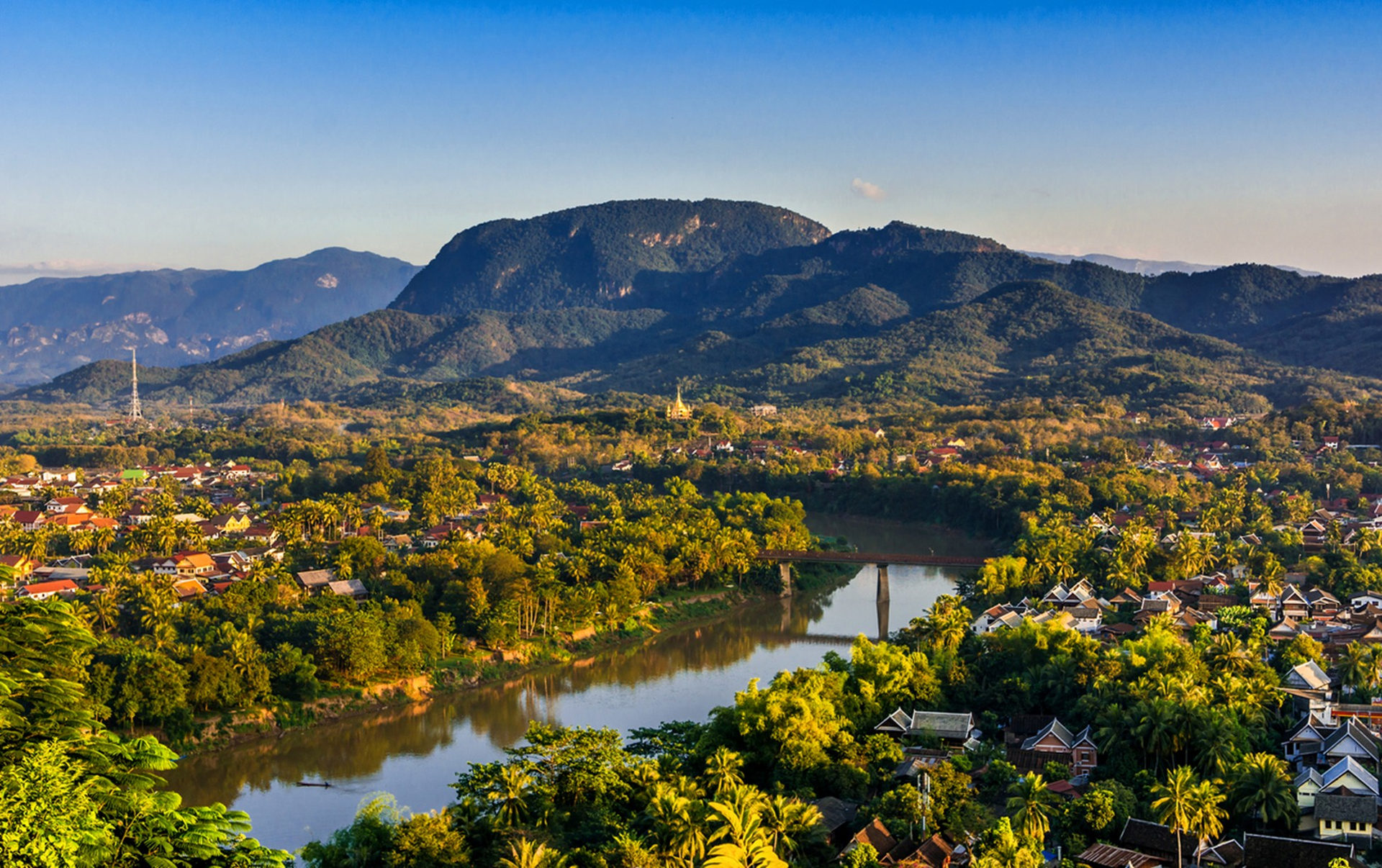
Even so, the main attractions can get busy. If you want to discover an even quieter side of life here, cross the Mekong River. On the opposite bank lies Chomphet. Getting there is part of the fun. A small, rather rickety ferry carries people and vehicles across the river. There is no bridge, and that has helped keep Chomphet apart from the growing tourism on the other side. Walk through the village and you pass monks, wooden houses, tiny markets, temples, and local families going about their day. A few miles farther out, you may spot the odd European cyclist, but foreign visitors are still uncommon. Stop at a roadside fruit stall or one of the simple cafés overlooking the Mekong. From here, you can sit with a drink and look back across the river toward Luang Prabang. It was at one of these cafés that we met Antoine, a retired chef from Ontario in his early 60s. He has lived here for six years. “You hear that?” he asked, pointing toward the sound of wind chimes at a nearby temple. “To me, that’s the sound of freedom.” For Antoine, retirement here meant leaving behind the daily grind, mortgages, politics, and Canadian winters. He and his wife wanted somewhere different. They did not want to follow the usual retirement trail. “There are around 100 retirees here now, and that number is growing,” he told us. “We wanted somewhere original and captivating.” Eventually, they chose the quieter side of the river. For them, it offers the best of both worlds. Their daily life is peaceful and rural, but when they want restaurants, markets, or a little more activity, Luang Prabang is only a short ferry ride away. The couple spend around $1,600 a month. “This place massages your mind,” Antoine said. Spend some time here and you begin to understand what he means. Local life rarely seems rushed. People move at the same steady pace as the Mekong itself. There is a sense of patience and calm that can feel strange at first. Then, little by little, you find yourself moving at the same pace. Back across the river, Luang Prabang has more energy, but it never feels frantic. At sunset, find a spot near the meeting point of the rivers and watch the light fade over the water. After dark, the night market becomes the center of town. Open each evening, it offers local food, French-inspired dishes, handicrafts, clothes, and gifts. The main street has stylish coffee shops and international restaurants, but some of the best food is hidden down the quieter side streets. We found excellent burgers, Indian food, and Italian restaurants, often at surprisingly low prices. Yet food, temples, and scenery are only part of Luang Prabang’s appeal. What stays with you is the feeling of the place. The longer you remain, the less important the clock seems. You sit by the river. You feel the breeze. You hear temple bells in the distance. You stop thinking about where you need to be next. Your heartbeat seems to slow. And perhaps that is why so many people who discover Luang Prabang find it so difficult to leave. In a world that’s always rushing, this little corner of Laos offers something rare: A chance to slow down. |






Comments
Post a Comment