Key Points
- Kroger shares are testing a critical long-term support level amid mid-2026 price pressure, but fundamental and technical indicators suggest the downtrend is unlikely to persist.
- Kroger's capital return program remains a key investor draw, with a 2.5% dividend yield, 19 consecutive years of dividend growth, and more than 7% share count reduction over the trailing 12 months.
- Fiscal Q1 revenue rose 2.2% to $46.12 billion, topping estimates by more than 500 million, though weak margins and cautious guidance kept the results mixed overall.
- Special Report: FORGET the SpaceX IPO
Kroger's (NYSE: KR) share price is under pressure due to slowing growth, sluggish results relative to high-flying AI names, and an expected slowdown in buybacks. However, despite the headwinds, the fundamental forces remain bullish, and the stock price is at long-term lows. Look for the company, institutions, and analysts to signal a buy that soon shows up in the charts.
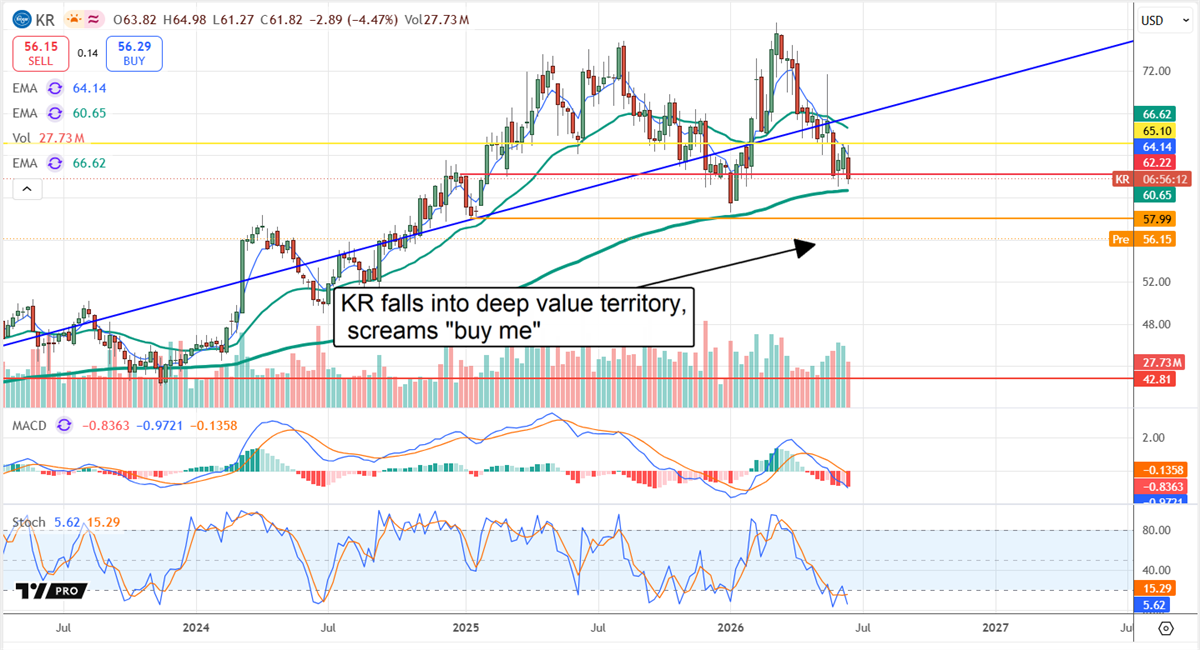
Technically, KR shares are testing critical support with long-term implications. The level represents a convergence of lesser targets, including previous lows and a long-term exponential moving average that has provided support numerous times.
A sustained dip below this level is unlikely, as it would indicate a significant change in the fundamental outlook; more likely, the June price implosion triggers a robust market response, confirming support and the long-term uptrend.
Kroger Isn’t a Growth Investment: Kroger Is About Cash Flow and Capital Return
Boiled down to its essence, Kroger is not so much a growth story as an inflation-resistant buy-and-hold story for long-term investors. Its attractions include a strong industry position, robust cash flow, and capital returns. Its industry position is that of a retailer focused on daily necessities and essentials like food, health and family care. Its benefits to investors include predictable cash flows, a healthy balance sheet, and the capacity for capital returns to increase over time.
Capital returns, specifically buybacks, are aggressive this year, the result of 2024's failed Albertsons (NYSE: ACI) bid, and are likely to slow in the upcoming year, remaining a driver for this market. The dividend is the base payment, yielding approximately 2.5% as of mid-year 2026, and the distribution is expected to grow. Kroger has increased its dividend for 19 years, is on track to be included in the Dividend Champions, and is unlikely to alter its trajectory without dire need.
Buybacks are the bonus. Accelerated in 2026 to utilize unneeded cash, which had been hoarded in anticipation of an acquisition, Kroger reduced its share count by an average of over 8% over the trailing 12 months. It is on track to exhaust a multi-billion-dollar authorization by year’s end. The question is what comes next, and an additional authorization is likely, albeit with a slower implied pace of share count reduction.
Kroger Analysts and Institutions Limit Downside Risk
Analysts and institutional trends highlight the quality of capital returns. MarketBeat tracks 17 analysts, high for such a mundane name, rating the stock as a consensus of Moderate Buy with a 53% Buy-side bias and no Sell rating logged.
They forecast approximately 30% upside at consensus, up from last year and steady over the trailing three-month period. It is unlikely that the Q1 release will catalyze price target revisions, whether bullish or bearish. The more likely outcome is for targets to fall, but sentiment and outlook to remain otherwise positive.
Institutional trends also reflect bullish behavior, with them owning more than 80% of the stock and accumulating shares. Selling has intensified in recent months, but is offset by greater buying, underpinning support for this market. The likely outcome from this vector, given the low share price and technical setup, is that selling pressure dwindles while buying ramps up. Kroger provides value at its current levels relative to its long-term forecasts and competitors. Competitors trade at double the valuation, while long-term forecasts suggest the stock could double over time while maintaining the current valuation.
Kroger’s Mixed Results Were Priced Into the Market
Kroger’s Q1 earnings release was mixed, providing reasons for caution but no impetus to shed shares. Revenue grew 2.2% to $46.12 billion, more than $500 million above expectations, but the margin was weak. The caveat is that margin contraction was minimal, leaving cash flow in solid shape. While lower than expected, the cash flow provides ample coverage of capital returns.
Looking ahead, guidance is also insufficient to catalyze a bullish market response but does not alter the capital return outlook. Near-term pressures will ease over time, enabling buybacks and distribution growth to do their work on the share price.
Kroger’s biggest risk this year is capital-intensive store updates. The company is rolling out nationwide digital shelf labels and supply chain enhancements expected to pay off over time. The risk is that they don’t translate into improved revenue or profits as quickly as hoped, and drag on results moving forward. Catalysts include systemwide price reductions intended to improve competitiveness and private label. The near-term headwind is margin pressure, but market share gains and private label strength will offset it over time.
Read this article online ›
The best investment opportunities don't wait. Get our research and stock ideas delivered straight to your smartphone—so you never miss a market-moving opportunity. Our text alerts ensure you see timely stock ideas and professional research reports instantly, whether you're in a meeting, commuting, or away from your desk.
Get Text Alerts from American Market News (free)



Comments
Post a Comment