|


Warner Bros Seeks Paramount's "Best and Final Offer," Upside Ahead?
Author: Leo Miller. Date Posted: 2/18/2026.

Key Points
- Warner Bros. Discovery is on the rise again as the firm seeks the "best and final" acquisition offer from Paramount Skydance.
- WBD's press release indicates that PSKY is willing to up its bid to $31, or potentially even higher.
- Still, WBD remains concerned about PSKY's funding sources, and is pushing for more certainty.
- Special Report: [Sponsorship-Ad-6-Format3]
Shares of entertainment giant Warner Bros. Discovery (NASDAQ: WBD) rose after the latest development in its acquisition saga. On Feb. 17, WBD shares closed up about 2.7%.
The catalyst was WBD's latest press release, which said WBD will initiate discussions with Paramount Skydance (NASDAQ: PSKY) to solicit its "best and final offer." At the same time, WBD continues to unanimously recommend that shareholders approve Netflix's (NASDAQ: NFLX) offer.
Have $500? Invest in Elon's AI Masterplan (Ad)
What if you could claim a stake in what's set to be the biggest IPO ever… starting with just $500?
Everyone is talking about Elon Musk's SpaceX IPO.
Investors interpret this as a sign the final purchase price to buy WBD could move higher. Below are the specifics of the announcement and the latest rumors to help decipher what this means for WBD stock.
Netflix Grants Waiver, Putting the Ball in PSKY's Court
Netflix has granted WBD a seven-day waiver, allowing the company to engage with Paramount Skydance on a revised acquisition proposal. At first glance, it may seem odd that Netflix agreed to this while it already has a deal in place with WBD, but there are reasons behind the decision.
Netflix understands that, despite its agreement with WBD, Paramount is likely to keep competing. By allowing the seven-day waiver, which ends on Feb. 23, Netflix is effectively trying to bring the bidding contest between it and PSKY to a close.
WBD shareholders will vote on March 20 on whether to approve the Netflix deal.
With that deadline approaching, Netflix likely wants all parties to show their hands quickly. If Paramount intends to acquire WBD, now is the time to put up or shut up.
The waiver gives Netflix time to assess any new offer from PSKY and calibrate a response before the March 20 vote. Crucially, Netflix retains the right to match any revised Paramount proposal.
Agreeing to the waiver also improves Netflix's optics if it ultimately wins the deal and moves through regulatory review. It lets WBD argue that it fulfilled its fiduciary duty by seeking the best possible outcome for shareholders—an argument regulators will likely consider during approval.
PSKY's Offer Could Move to $31 or Higher, But Issues Remain
One notable passage from WBD's press release reads:
"On February 11th, a senior representative of your [PSKY's] financial advisor communicated orally to a member of our Board that PSKY would agree to pay $31 per WBD share if we engage with you, and that $31 is not PSKY's best and final proposal."
That language creates a strong expectation that PSKY's next offer will be at least $31 per share, up from its prior $30-per-share bid. A $31 offer would fall in the mid-to-upper range of the approximate value the Netflix deal would provide WBD shareholders, which MarketBeat has estimated to be between $28 and $33.
Paramount has also said it would pay Netflix the $2.8 billion breakup fee if WBD accepted Paramount's offer, and it has offered other financial enhancements. Still, WBD has a list of outstanding concerns it wants PSKY to address.
Those concerns include financing fees, which party would exert control over WBD's operations before closing, and certainty around Paramount's funding sources. Although Paramount's bid is all cash, much of that cash would come from financing. If market conditions or business fundamentals deteriorate, PSKY's borrowing costs could rise or financing could vanish—potentially undermining Paramount's incentive to proceed, prompting renegotiation, or causing the deal to collapse.
To guard against that risk, WBD is seeking a firm commitment that if debt financing falls through, PSKY's owners will cover the shortfall with their own capital.
WBD Continues to Be in a Strong Position
WBD views PSKY's proposal as structurally riskier than Netflix's offer. Even if Paramount's headline bid is higher, WBD sees more paths by which that deal could be renegotiated or fail to close.
For WBD shareholders, the news is constructive. Further upside could come if PSKY raises its bid and improves financing terms—moves that might also draw a higher counteroffer from Netflix. Meanwhile, Netflix's existing agreement should provide downside support for the stock.
PayPal Stock Halted on Stripe Rumor: Why the Narrative Just Changed
Author: Jeffrey Neal Johnson. Date Posted: 2/25/2026.
Key Points
- A report that Stripe is in preliminary talks to acquire some or all of PayPal triggered a volatility halt and a fast re-rating in PYPL shares.
- The valuation gap between PayPal’s public market cap and Stripe’s private valuation helps explain why investors see meaningful upside in a deal scenario.
- The timing—during PayPal’s leadership transition—increases the odds that the board will seriously weigh strategic alternatives, including a transaction.
- Special Report: [Sponsorship-Ad-6-Format3]
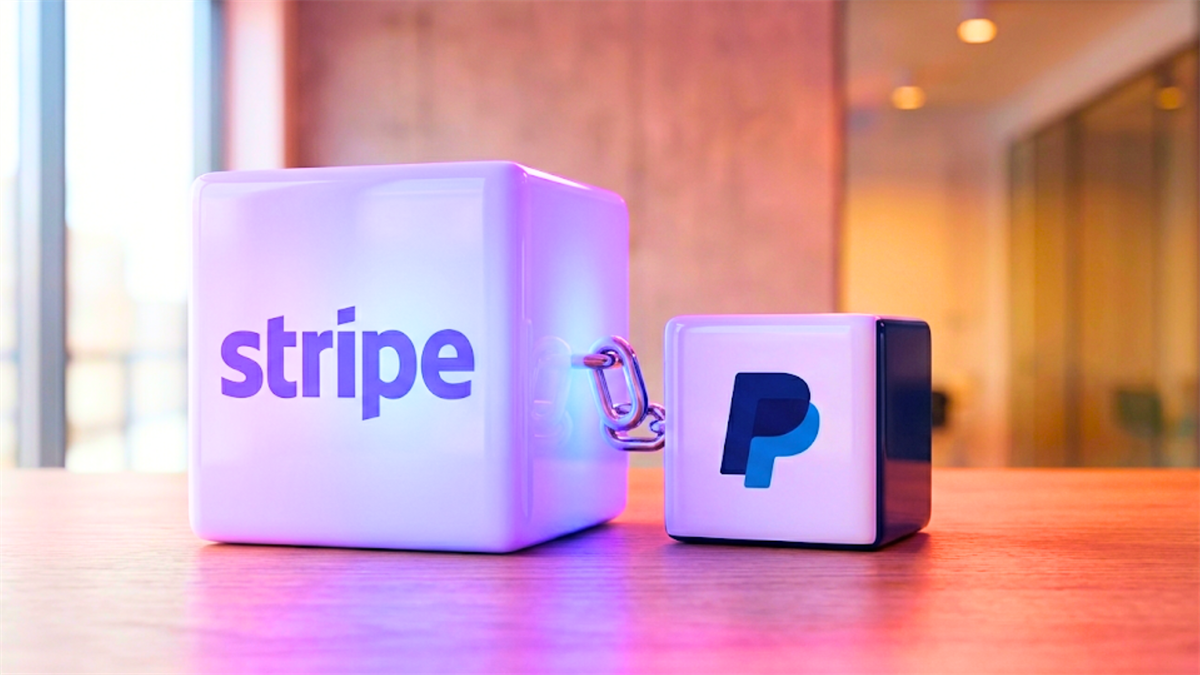
The end of February shattered the silence around PayPal (NASDAQ: PYPL) stock. For months, investors watched shares drift lower after a disappointing fourth-quarter earnings report and lackluster guidance. The prevailing narrative framed the fintech pioneer as a value trap destined for slow growth. That story changed in an instant when a volatility halt froze trading screens across Wall Street.
PayPal stock triggered a Limit Up/Limit Down (LULD) circuit breaker on Feb. 24, 2026, pausing trading as buy orders flooded the market. The catalyst was a Bloomberg report that payments giant Stripe is in preliminary talks to acquire some or all of PayPal. When trading resumed, shares rose, closing the day up 6.72% at $47.01. Volume surged to nearly 200% of the daily average, suggesting institutional participation rather than just retail speculation.
Have $500? Invest in Elon's AI Masterplan (Ad)
What if you could claim a stake in what's set to be the biggest IPO ever… starting with just $500?
Everyone is talking about Elon Musk's SpaceX IPO.
This episode represents a potential turning point. The market abruptly recognized that PayPal may be trading well below its strategic value. At a market capitalization of roughly $43 billion, the company looked priced for zero growth. Interest from a major competitor implies PayPal's underlying worth could be far higher than the current share price suggests. Those rumors have effectively put a floor under the stock, shifting it from a turnaround narrative into a high-stakes arbitrage opportunity.
Math Problem: $159 Billion vs. $43 Billion
The financial contrast between public markets and private valuations is stark. Stripe has been valued at about $159 billion in recent funding rounds and secondary-market activity. By contrast, PayPal's public market cap sits near $43 billion. That gap highlights a major disconnect in how the market prices fintech assets.
- Stripe: Valued at roughly $159 billion. Dominates backend merchant processing but lacks a broad, direct-to-consumer app.
- PayPal: Valued at roughly $43 billion. Commands the consumer wallet space with 400 million+ active accounts, but has struggled to grow branded checkout.
Merging Stripe's merchant infrastructure with PayPal's consumer ecosystem would create an end‑to‑end payments powerhouse. Smart-money investors are looking past near-term headwinds in branded checkout and focusing on PayPal's large user base and cash generation—about $6 billion in free cash flow—while the stock trades at a price-to-earnings ratio of roughly 8.7x. That multiple is bargain-basement territory for a tech company and typically reserved for businesses in severe decline, not one producing billions in cash.
Think about the data synergy: Stripe knows what merchants sell; PayPal knows who is buying. Combining those datasets would enable advertisers and acquirers to close the loop between ad impression and final transaction in a way that Alphabet (NASDAQ: GOOGL) and Meta (NASDAQ: META) have spent years trying to achieve. That strategic upside helps explain the market's enthusiastic reaction to the rumor.
The Leadership Void: Why Strike Now?
The timing of the rumors is notable. PayPal is navigating a fragile leadership transition: incoming CEO Enrique Lores, formerly of HP (NYSE: HPQ), is scheduled to take the reins on March 1, 2026. That interval between regimes—an interregnum—creates a window of vulnerability.
At present, the company is led by interim CEO Jamie Miller. While capable, an interim executive is generally less likely to make sweeping strategic changes or decisively reject credible buyout offers without full board engagement. An acquirer such as Stripe may prefer to act before Lores can implement a standalone turnaround plan or reorganize the business in ways that would raise the price of a deal.
Investors must weigh two plausible scenarios for Lores:
- The Dealmaker: Lores arrives with a mandate to maximize shareholder value quickly—potentially negotiating a sale or large asset spinoff (for example, Venmo) to realize value.
- The Defender: Lores insists on independence, arguing that his turnaround plan will generate more long-term value than any current buyout premium.
Either way, the presence of an interested bidder forces the board to re-evaluate the company's value, a process that typically supports the share price.
The Bidding War: Who Else Is Watching?
If Stripe is poring over the books, other potential bidders are likely paying attention. A takeover would probably trigger a competitive auction: major banks, private‑equity firms and strategic acquirers all have incentives to participate.
- Major banks: They have capital but lack a polished consumer tech stack. Building a wallet from scratch is costly; buying PayPal would offer an immediate, global consumer relationship—albeit with integration challenges.
- Private equity: Financial buyers prize cash generation. A leveraged buyout could allow a firm to take PayPal private, reorganize operations away from quarterly scrutiny, and potentially break the business into parts.
A sum‑of‑the‑parts view suggests that monetizing Venmo separately while keeping the core processing business could unlock value well above the current $47 per‑share level. Venmo's high engagement and younger user base alone could command a significant valuation component of PayPal's total market cap.
The Floor Is In: Options Traders Make Their Move
Options-market activity has reinforced the shift in sentiment. After the halt, there was aggressive buying of call options for late February and March expirations. Traders paid premiums for the right to buy stock at higher levels, betting that momentum will continue or that a formal deal announcement is imminent. That flow suggests the market expects upside resolution to the incoming volatility.
Technically, the rumored interest establishes a support band for the shares. Before the news, the stock traded near $38—a price that reflected a worst‑case scenario. With M&A now on the table, the $38–$40 range behaves as a more concrete floor. It's unlikely the stock will revisit those lows while a credible buyout remains possible; any dip is likely to attract investors seeking the spread between the market price and a potential offer.
Regulatory hurdles remain a real consideration. The Federal Trade Commission would scrutinize a merger of this scale, especially one joining Stripe and PayPal. Still, for many traders the immediate event matters more than the long‑term regulatory outcome: an announced deal typically pushes the stock quickly toward the offer price. Whether the transaction ultimately closes months later is a separate risk, but the initial re‑rating itself creates a near‑term opportunity.
Asymmetric Upside: The New Rules for PayPal Stock
These developments have rewritten the investment case for PayPal. The narrative has shifted from execution and margin pressure to asset realization and strategic value. Downside risk is now cushioned by the company's profitability and the fact that well‑capitalized suitors are circling.
For investors, the situation offers an asymmetric risk/reward profile. If a deal is announced, upside would be immediate and potentially large. If no deal materializes, the stock remains supported by deep value metrics and an incoming CEO whose mandate may be to unlock shareholder value. The market has signaled that PayPal is too cheap to ignore, and the circuit‑breaker halt served as a loud signal that investors should reappraise the company.
This email is a paid sponsorship from Advantage Gold, a third-party advertiser of MarketBeat. Why did I get this email content?.
If you have questions about your account, please email our U.S. based support team at contact@marketbeat.com.
If you would no longer like to receive promotional emails from MarketBeat advertisers, you can unsubscribe or manage your mailing preferences here.
© 2006-2026 MarketBeat Media, LLC. All rights protected.
345 N Reid Place, Suite 620, Sioux Falls, S.D. 57103. U.S.A..
Comments
Post a Comment